

Mayor Wilson Announces Executive Order to Accelerate Housing Production Across Seattle
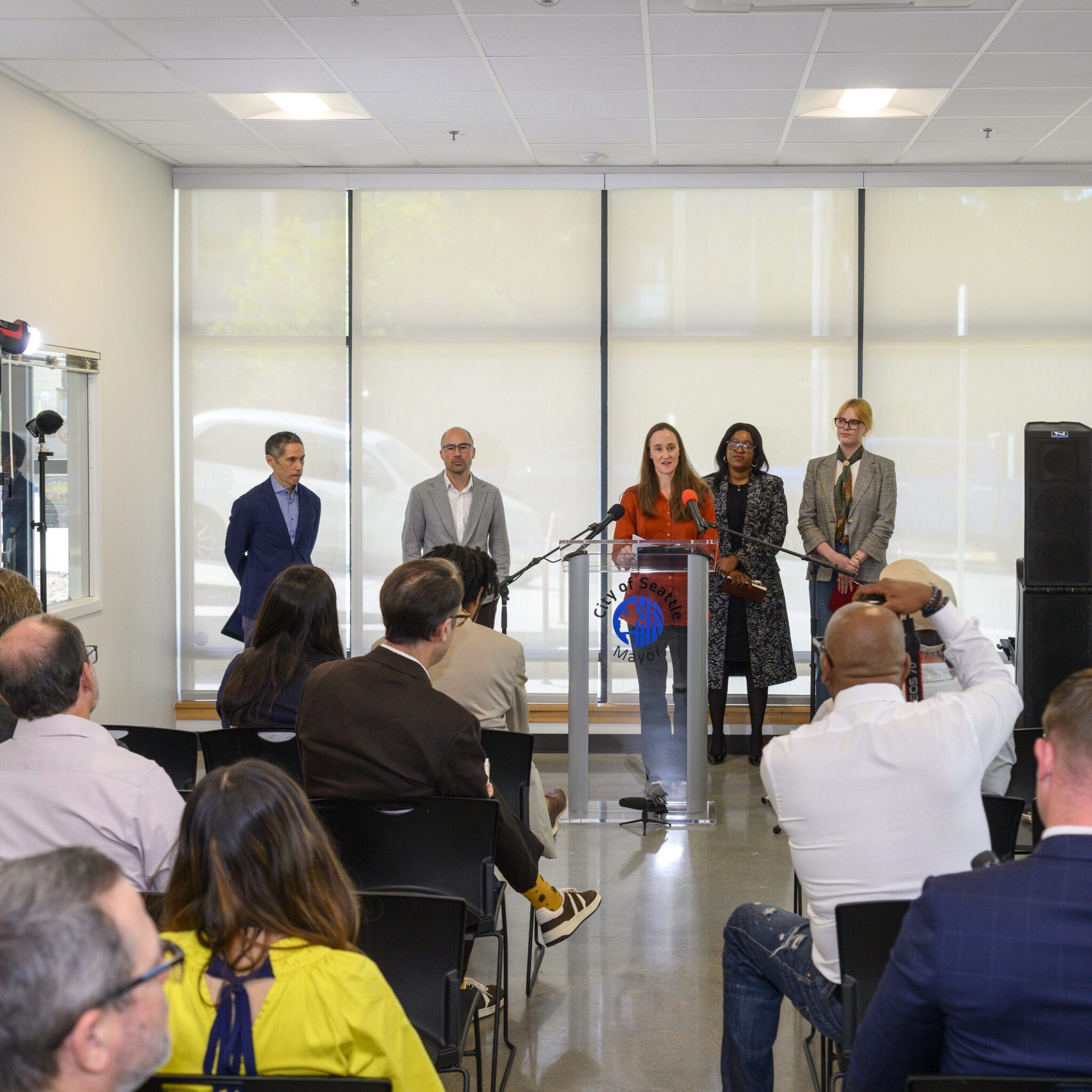
Today, Mayor Katie B. Wilson announced actions outlined in Executive Order 2026‑4 to address housing production and housing affordability. The order is designed to spur both affordable and market‑rate housing by streamlining permitting and launching a Housing Production Task Force to advise her housing agenda.
“Housing that people can afford is critical to a city that works for everyone,” said Mayor Wilson. “We can’t control every force that drives up the cost of building homes, but we can act where it counts. This Executive Order is about clearing the path, cutting the delays, and building the housing Seattle needs — now.”
Immediate Permitting Actions
Within existing resources, the City will take near-term steps to make permitting faster and more predictable:
- The Seattle Department of Construction and Inspections (SDCI) will help low-income housing developers navigate cross-department processes, with a focus on supporting community-driven development.
- Seattle City Light, the Seattle Department of Transportation, the Seattle Fire Department, and Seattle Public Utilities will each designate a primary point of contact for interdepartmental coordination to quickly resolve permitting issues for applicants.
- The Mayor’s Office will propose funding for an Affordable Housing Ombuds in the 2027-28 budget to strengthen this work.
- The Mayor’s Office will launch a Residential Permitting Interdepartmental Team to make permit timelines shorter and more predictable across all regulatory departments involved in most housing construction projects.
A New Housing Production Task Force
The Executive Order establishes the Housing Production Task Force, convened by the Mayor’s Office, the Office of Planning and Community Development, the Office of Housing, and SDCI. The Task Force will bring together representatives from labor, affordable housing providers, community-driven organizations, and market-rate developers.
The Task Force is co-chaired by Seattle City Councilmember Eddie Lin, District 2; Tiffany Kelly-Gray, Director of Strategic Initiatives, Bryd Barr Place; Cartner Nelson, Director of Government Affairs, CREDA; and Joel Ing, Principle, Edge Developers.
The group is charged with developing and advancing policies that accelerate housing production to meet Seattle’s growing and changing needs. Its work will focus on shared solutions to expedite and incentivize housing production, encourage community-driven development, support the affordable housing infrastructure the city and region need, and prevent the displacement of households with low incomes.
Grounding its work in current housing needs and production data, the Task Force will examine strategies to grow housing for families below 50% of area median income and larger households, recommend updates to the Mandatory Housing Affordability program, shape the future of Design Review, strengthen the pipeline of permanent supportive housing, support homeownership and anti-displacement strategies, and preserve existing affordable housing.
The Task Force will work through these issues over 12 months in partnership with the Mayor’s Office and City Council. It will deliver a status update with 2027 policy recommendations no later than February 2027, and final recommendations for 2028 and 2029 by September 2027.
Aligned Department Work and Public Partnership
These actions build on efforts already underway across City departments, including:
- Phases 3 of Comprehensive Plan zoning implementation.
- Equitable Development Initiative strategic planning and coordination with housing development projects.
- The cross-departmental Anti-displacement Working Group.
- New Office of Housing capital, preservation, and operating investments.
- Use of publicly owned land for affordable housing.
- The office-to-residential conversion program.
- Integration of recent state law changes that advance middle housing, support transit-oriented development, and reform permitting.
The City’s work will also leverage efforts at other levels of government, including King County’s Breaking the Cycle workgroup and its countrywide housing revenue table, and the Washington Accelerator for Residential Production.
What People Are Saying
Councilmember Eddie Lin, District 2, City of Seattle, Housing Production Task Force co-chair:
“I’m honored and incredibly excited to work with this diverse and extremely accomplished group. As we work collaboratively, we must be laser focused on building and preserving housing for people of all incomes. No one can solve this alone, but together we can make Seattle a place where we can all thrive.”
Tiffany Kelly-Gray, Director of Strategic Initiatives, Bryd Barr Place, Housing Production Task Force Co-chair: “I’ve spent my career working at the intersection of economic development and racial equity, and housing is where that work becomes real for families in South and Central Seattle. Byrd Barr Place sees every day what happens when people can’t find or afford a place to live near their jobs, schools, and community. I joined this task force because I want Seattle’s housing production policies to be shaped by people who understand what’s at stake for working families. My hope is that this group produces recommendations that actually speed up permitting while keeping equity and community ownership at the center.”
Carter Nelson, Director of Government Affairs, CREDA, Housing Production Task Force Co-chair:
“The Commercial Real Estate Development Association (CREDAWA) appreciates the opportunity to serve in a leadership role with this task force. Our members, from engineers and architects to contractors and developers, are committed to delivering the housing our city needs to keep pace with growth and increased housing demand. Seattle residents deserve housing choices, and additional market-rate housing development is a critical part of improving housing affordability.
We’re proud to be partnering with the Mayor’s Office, nonprofits, community members, and housing experts to focus on a shared goal: creating more housing. By bringing people together around practical, actionable solutions, this task force has an opportunity to make a real difference for current and future Seattle residents”
Patience Malaba, Executive Director, Housing Development Consortium
“For affordable housing, delays have real consequences. When permits stall, costs rise. The Affordable Housing Ombudsperson and Interdepartmental Team can help create the coordination and accountability needed to keep projects moving. Clear points of contact across SDCI, Seattle City Light, SDOT, Seattle Fire, and Seattle Public Utilities can help resolve problems earlier and give housing providers greater certainty.”
Joel Ing, Principal, Edge Developers, Housing Production Task Force Co-chair:
I look forward to working with dedicated community members in improving the review and funding requirements that will increase affordable and market rate housing in our city.
Following up on the efforts ten years ago of the Housing Affordability and Livability Agenda (HALA) task force to increase housing production, now is the time to refine many of those strategies while developing new initiatives. The housing shortage continues to worsen so the opportunity to improve many development requirements that prevent and challenge housing production is both welcomed and needed.
As a native Seattleite who grew up here on Beacon Hill and Rainier Valley, I have seen both the development and displacement of residents in the area while also recognizing the ongoing need for housing that matches the community needs. I am dedicated to continue developing housing and related community spaces in our city and am confident the task force efforts will improve development timing, required funding, design and construction requirements, and overall project success. This is an opportunity to reduce the regulatory barriers that slow good projects down and make sure long-time residents who grew up in the community can afford to stay.
Legal Disclaimer:
EIN Presswire provides this news content "as is" without warranty of any kind. We do not accept any responsibility or liability for the accuracy, content, images, videos, licenses, completeness, legality, or reliability of the information contained in this article. If you have any complaints or copyright issues related to this article, kindly contact the author above.
